In this article
What palliative care means in a nursing home
Palliative care is care for someone whose illness cannot be cured, aimed at comfort, symptom control and quality of life. It can last months or years, and it includes end of life care in the final weeks and days. In a nursing home it means registered nurses who can give prescribed pain relief, anti-sickness and anxiety medication in the person's own room, day and night. Parkview provides palliative care for its residents and, subject to assessment and availability, for people admitted in their final months.
Who it is for
People with advanced cancer, heart failure, lung disease, kidney failure, Parkinson's, motor neurone disease, advanced dementia and frailty in old age. A person may come to Parkview from a hospital such as Croydon University Hospital when treatment has stopped and a ward is no longer the right place. Others are already residents here and their condition has changed. For some families, the priority is being close enough to visit from South Norwood or Crystal Palace.
How Parkview works with the hospice and the GP
The resident's GP remains responsible for prescribing and reviews, and community palliative care nurses and district nurses can be involved as needed. Hospice teams can advise on symptom control; St Christopher's Hospice in Sydenham is one of the hospices serving south London, and the GP can say which service covers the person's address. Our nurses carry out the plan: giving medication, checking symptoms, repositioning, mouth care and pressure area care, and calling the GP when something changes. If a resident wants a hospice bed for the last days, we discuss this with the GP and the family.
Advance care planning
The most useful conversation happens early. It helps to discuss what matters to the person and the family: where they want to be cared for, what treatments they would and would not want, whether they would want to go to hospital if they became very unwell, and who should be told what. This can be recorded in an advance care plan and, where appropriate, in a ReSPECT form agreed with the GP. Where someone has made a lasting power of attorney for health and welfare, bring a copy.
What families can expect in the last weeks
- A single room; ask about relatives staying overnight and about visiting times.
- Food and drink offered in whatever form the person can manage, and mouth care when they can no longer swallow.
- Pain and other symptoms reviewed by nurses, with medication adjusted through the GP.
- Honest conversations: ask us what we are seeing and what it means.
- Support for faith and culture, in line with the person's and family's wishes.
- Ask what happens after a death, including the GP, the registrar and the funeral director.
What we cannot do
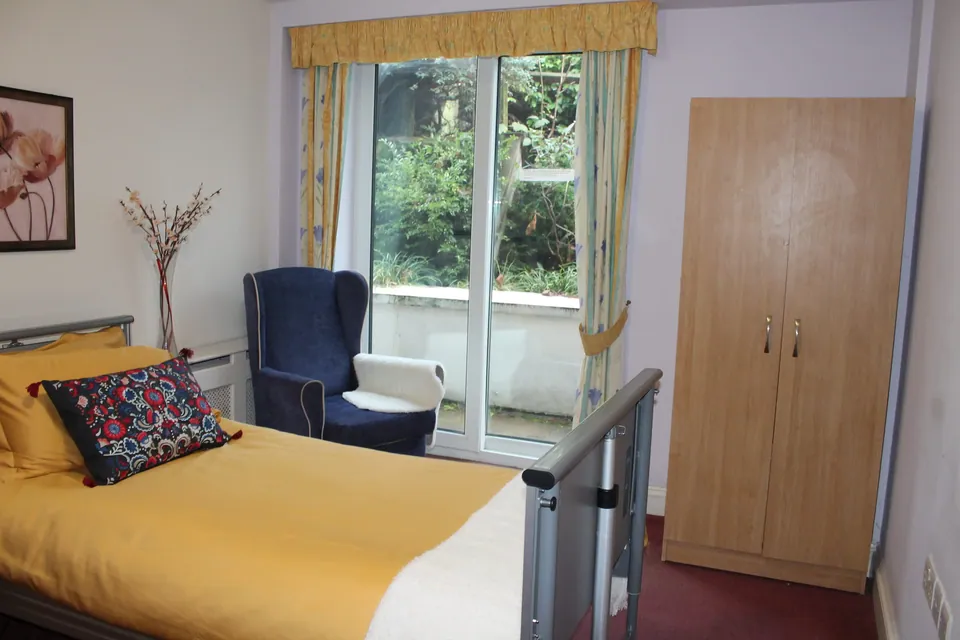
A nursing home is not a hospice or a hospital. We cannot give treatments that need a hospital, such as intravenous chemotherapy, blood transfusions or radiotherapy. We also do not have a doctor on site; medical care comes through the GP and, out of hours, NHS 111. Families should know this before choosing a nursing home for the final months.
Funding palliative care
A person who is deteriorating rapidly and approaching the end of life can be fast-tracked for NHS Continuing Healthcare, which pays the full nursing home fee; a doctor or nurse completes the fast-track tool and the integrated care board must respond quickly. Ask the hospital, hospice or GP about this before or at admission. Where fast track does not apply, NHS-funded nursing care is paid to the home each week for anyone assessed as needing a registered nurse, and the London Borough of Croydon means-tests the balance against the 2026/27 capital limits. Attendance Allowance can be claimed under special rules for people who are terminally ill.
Faith and family at the end of life
The rites that matter at the end of life differ from one family to another. Tell us what your family wants: a priest, imam, pandit or granthi to attend, prayers read or played, a lamp kept, particular arrangements after death. Ask about staying overnight, bringing children and keeping a vigil in the person's room. After a death, ask the nurse in charge what happens next, and who will contact the GP and the funeral director the family chooses.
Talking to Parkview
Parkview Nursing Home is at 1 to 3 Eversley Road, Upper Norwood SE19 3PY, close to Crystal Palace and Gipsy Hill stations. If you are considering a nursing home for someone's final months, call 020 8771 5234 or use the contact form; we will talk through what the person needs and say honestly whether we can provide it.
Where to go next
Sources: End of life care (NHS) · St Christopher's Hospice · Marie Curie · NHS Continuing Healthcare (NHS)
A question about care? Our team is here to help.
Talk to our team